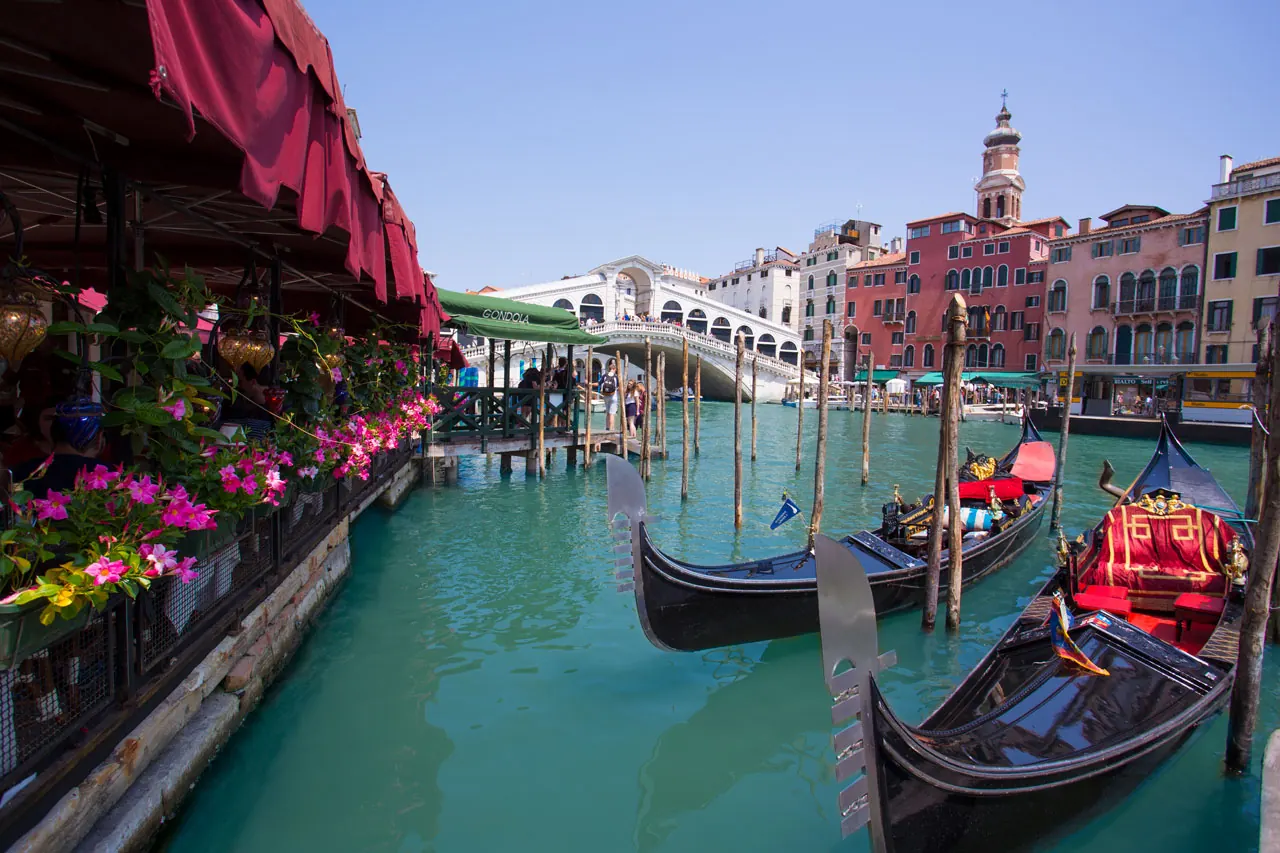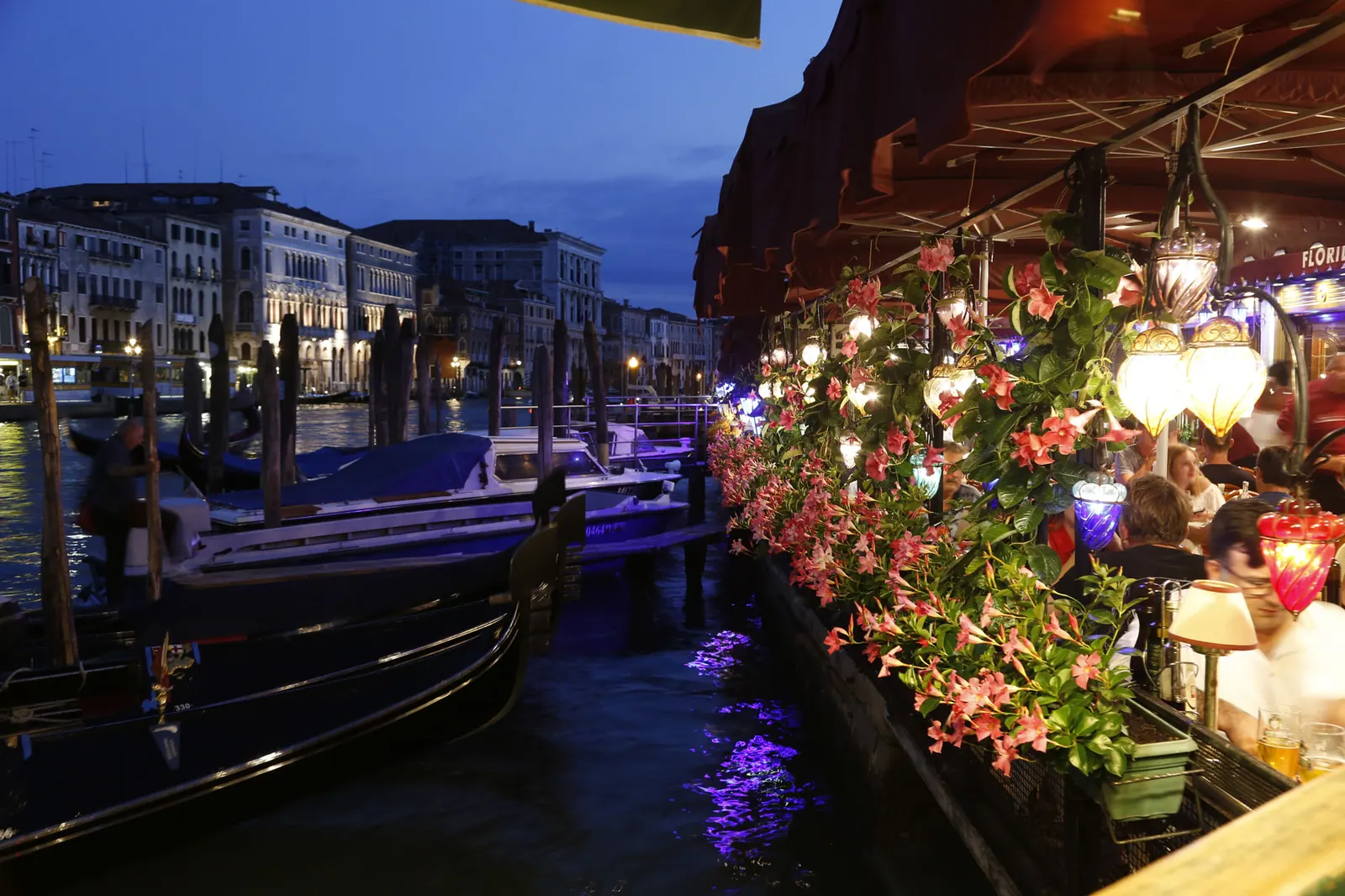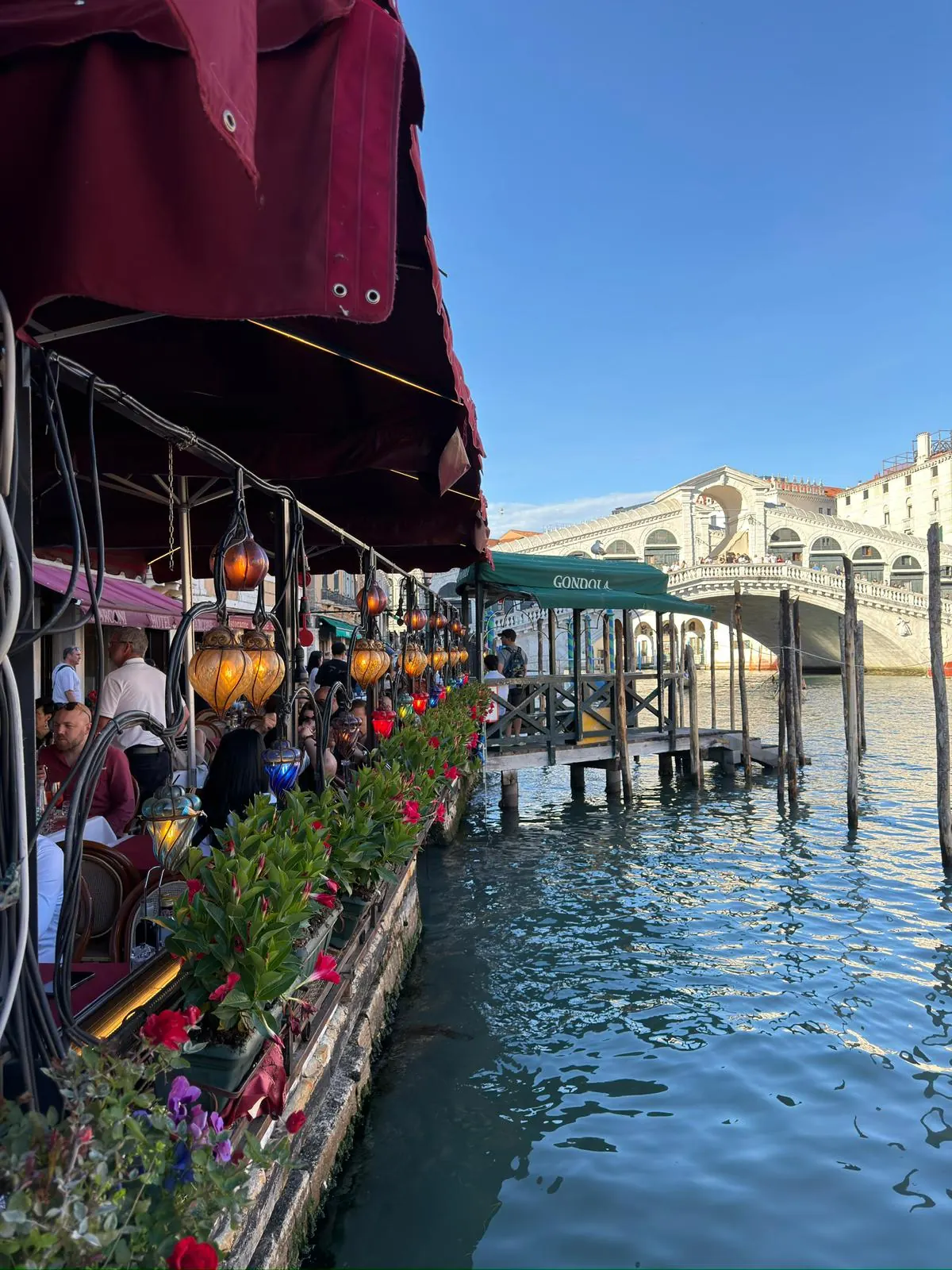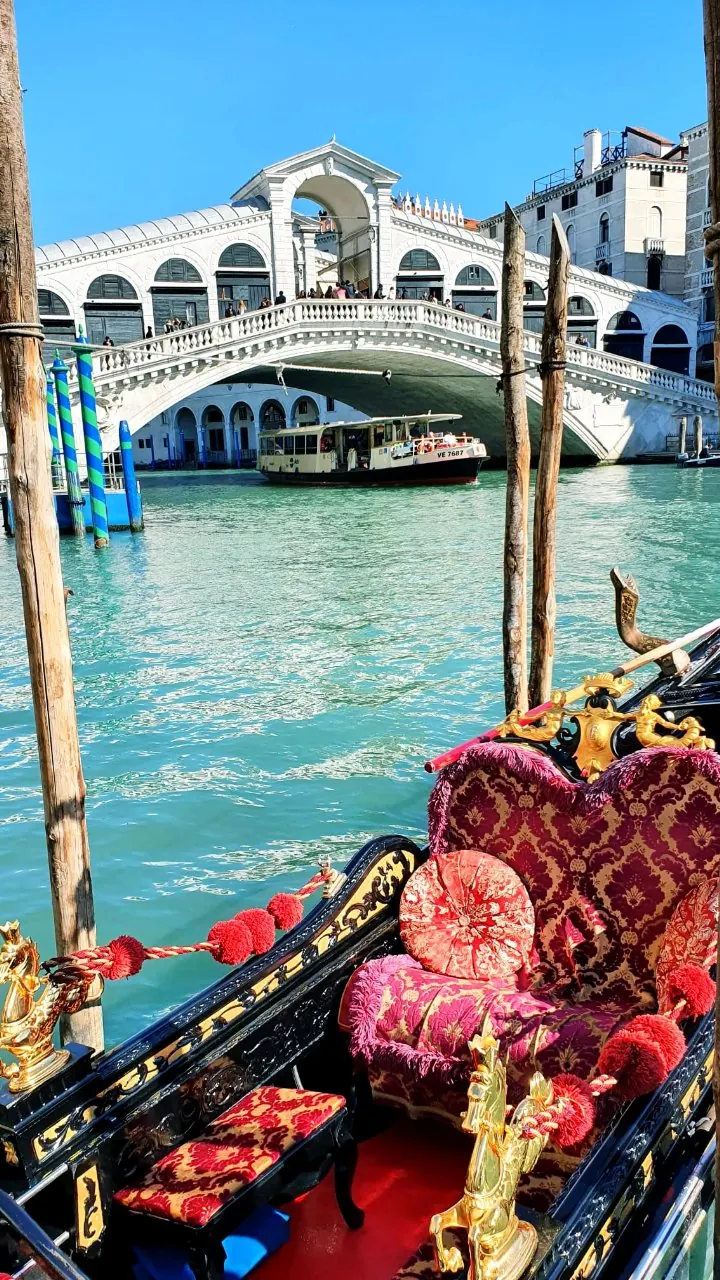
Venice is a city that, for a first-time visitor, feels impossible to navigate. There are no streets, house numbers follow their own logic (they reach 6828 in a single sestiere), and the yellow arrow signs — the ones marked Rialto, San Marco, Ferrovia — sometimes contradict each other. The good news is that reaching Terrazza Sommariva on the Riva del Vin is simpler than it seems, once you know two or three things. We are right beneath the Rialto Bridge, on the San Polo side, overlooking the Grand Canal.
If you arrive by train at Santa Lucia station, the finest way is vaporetto line 1 from the 'Ferrovia' pier, heading San Marco: the slow boat that stops all along the Grand Canal. The easiest stop is San Silvestro: it is on our side of the canal, so you walk a minute or two along the water to Riva del Vin 731 without crossing any bridge — ideal with luggage. Alternatively, lines 1 and 2 stop at Rialto, on the opposite bank: from there cross the Rialto Bridge and turn right along the water. A water taxi can drop you right in front of the restaurant.
If you prefer to walk from the station, it is about twenty-five pleasant minutes. Leaving Santa Lucia cross the Scalzi bridge, then follow the yellow Rialto signs: you will pass through Campo San Simeone Grande, then San Giacomo dell'Orio, Campo San Polo (one of the largest in Venice). From San Polo it is five more minutes straight ahead following Rialto: you will come out right onto the Riva del Vin, on the Grand Canal side. A tip: download an offline map to your phone, because GPS in Venice does what it likes between the calli.
If you come by car, remember that historical Venice is pedestrian: you drive as far as Piazzale Roma or the Tronchetto and continue only on foot or by vaporetto. The Tronchetto is cheaper for a long stay; Piazzale Roma is closer, fifteen minutes on foot from the station. If you arrive by plane at Marco Polo, the most comfortable option is the Alilaguna orange line, stopping at Rialto in about fifty minutes. Otherwise, the ATVO bus to Piazzale Roma and then vaporetto or a walk. Call us the same day if in doubt: we are here to help you get here without stress.
One last thing, so you know where you are arriving: the name of the quay describes what it did. According to the historical account published by the Comune di Venezia, the Riva del Vin was the landing where boats loaded with wine moored and where the cargo was unloaded and traded — one of the few stretches of the Grand Canal you can still walk along. The quay we set our tables on is that one.
Sources & further reading
The historical and practical information in this article is checked against the official sources below.
Regione Veneto
Elenco regionale dei Luoghi Storici del Commercio — opens on an external siteOfficial regional register of historic places of commerce.
Comune di Venezia
Mercato di Rialto — opens on an external siteOfficial information about Rialto Market.
AVM / ACTV
Orari e linee di navigazione ACTV — opens on an external siteOfficial waterbus timetables and routes.
Comune di Venezia
Una calle, una storia: Riva del Vin — opens on an external siteThe city's historical account of the origin of the Riva del Vin, the mooring of the wine boats and the commercial role of the quay.